Home » Articles posted by Mike van Mil (Page 14)
Author Archives: Mike van Mil
Photo of the Day: Trusty helps introduce violence, bullying and abuse prevention training to schools in Canada

Trusty, a Canadian Red Cross violence and abuse prevention mascot, has been very busy over the past couple of weeks. First, Trusty visited Iqaluit to supervise a two day Beyond the Hurt workshop to youth at l’École des Trois-Soleils, where he also had the opportunity to ride his first ski-doo!
The following week, Trusty travelled to Atlantic Canada after learning that the very first francophone Prevention Educator training was being held in Fredericton, New Brunswick. This training composed of a group of 14 social workers, vice-principals, and support staff from the francophone school district who are looking to introduce the Beyond the Hurt program to their schools.
Share this:

Chest Pain? Why did the paramedics not take me to my local hospital?
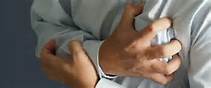
Being as November is #CPRMonth and I recently saw a patient that was currently experiencing a heart attack it got me thinking about how much you guys currently know about chest pain and heart attacks. It is important to note first off that as soon as you feel any chest pain PLEASE CALL 911! The paramedics have certain questions and diagnostics they can perform to help determine the cause of your chest pain. Do not try to down play your symptoms and delay calling. What my partner and I always say to people we see who are experiencing any form of chest pain is that the only true defining test to determine if your chest pain is heart related or not is by blood work at the hospital and the physicians assessment. Only a medical doctor can give you a diagnosis of your chest pain. While there are many different diagnoses of chest pain and their symptoms can vary the focus of this will be the the kinds of chest pain related to heart attacks.
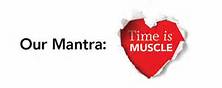
When you experience chest pain it is of crucial importance to call 911 immediately. The mantra that has been ingrained into me is that “Time is Muscle“. What does this mean? Well simply put your heart cannot repair itself like your skin does when there is an injury or damage. A heart attack is a blockage of one of the arteries that supplies your heart with oxygenated blood; that your heart needs to function. As soon as there is a blockage of one of the arteries the area of your heart that that artery supplies no longer receives what it needs to stay alive and tissue begins to die. So the sooner you can call 911 the less heart tissue that has the potential to die; Time is Muscle.
So you’re having chest pain, you call 911 right away, the paramedics arrive and determine you are having a heart attack ( you may also hear the term STEMI). You expect them to transport you to your local hospital. They explain to you that they will be transporting you to another hospital which can sometimes be farther away. But why? This does not make sense to you; you’re having chest pain so why are they taking you farther away; shouldn’t they take you to the closest hospital where you can get treatment and see a doctor sooner?
The reason for this is that there are certain types of heart attacks (STEMI’s) that the paramedics can determine on scene by doing an ECG or cardiogram. These types of heart attacks are best treated at hospitals that have whats called a heart catheterization lab. The process involves running a wire through an artery, most commonly your wrist but sometimes in the groin, all the way to your heart. A dye is then injected that is visible by X-Rays and the doctor can determine where and how best to treat your heart attack.
“But why do I need to go there now? Why can’t I just got to my local hospital get stabilized there then go to this “heart hospital”? Well it all goes back to the whole “Time is Muscle” thing. The only way to treat the blockage is with that heart catheterization and the sooner the doctor can see whats causing your heart attack and treat it the less permanent
damage there will be. By taking you the the local cardiac center vs the closer hospital the Paramedics are preventing further damage to your heart and getting you to the appropriate treatment at the soonest possible moment.
I hope this post has educated you a little and answered some questions you may have had. If you have any further questions please ask in the comments section. If it directly relates to your personal medical history/problems please discuss those with your doctor.
Here are some links with some more information you might find helpful
http://www.rougevalley.ca/code-stemi
http://firstrespondersnetwork.com/codestemi/what-is-a-stemi/
http://www.ottawaheart.ca/heart_disease/heart-attack.htm
Share this:

Tech Talk: Twitter Launches Alerts Service

Recently, Twitter announced a new ‘Alerts’ program that allows local, national, and international agencies like emergency management officials, law enforcement, public safety agencies and organizations that provide emergency relief such as the Red Cross to alert Twitter users in the event of a crisis or disaster.
When an alert is sent out, users that subscribe to the organization’s alerts will receive a text or push notification. Alerts will also show up in the “timeline” of users who follow the Twitter account. Twitter alerts can be retweeted, saved as favourites, and replied to so you can share them with your followers as well. While not intended to replace primary emergency notification systems, the service will enable quick and easy dissemination of time sensitive information during an emergency.
In the event of an emergency a Twitter alert could help spread important information about how to prepare for the emergency or where to seek shelter or help. You can read more about it here.
Let us know what do…
View original post 10 more words
Share this:
Spotlight: Health Care in Danger
I think we as #Paramedics in Canada can sometimes take our basic safety rights for granted. Watching the video in this blog has really hit home of the dangers paramedics and health care workers face while working in conflict areas. Please take moment to read this post and watch the video. The Red Cros and ICRC are doing great work around the world and yet they can still become targets!

This week, the Canadian Red Cross and the ICRC are hosting a workshop bringing together experts to identify recommendations to ensure the safety of health facilities in times of conflict. As such, we’ll be posting a blog post every day this week to help raise awareness about the need for healthcare workers to be protected in emergencies.
Ambulances, hospitals and medical personnel have been under threat or the target of violence in countries such as Syria, Somalia, Afghanistan, and in other parts of the world affected by conflict or emergencies. When healthcare workers are in danger, the impact is also felt by those who need access to health care.
According to the International Committee of the Red Cross (ICRC), this is one of the most crucial yet overlooked humanitarian issues today. The Red Cross has launched the Health Care in Danger campaign to raise awareness on these issues and find…
View original post 83 more words
Share this:
Learning first aid an empowering experience
Bystander CPR is key to Cardiac Arrest survival. All of the people that I know of that have survived a cardiac arrest (their heart stops) have had some element of bystander CPR before the paramedics arrived with advanced life support. I encourage all of you reading this to learn CPR. You could save a loved one or friend or a loved one or friend of someone else! Even “Hands only CPR” has been proven to help in survival rates! There are lots of places to learn and your local Red Cross is a great place to start!

Guest post by Sandra Brunner, a member of the Canadian Red Cross Social Team and a Red Cross digital volunteer
I recently had to update my CPR/AED skills to include infants, as I was teaching mom and baby Pilates classes. I thought it would also be a good time to get my Standard First Aid, something I had been thinking about. I got in touch with my friends at the Red Cross and signed up through them for a two day CPR/AED and Standard First Aid course.
There’s always a small amount of fear when I sign up for courses like this. The reality is that you’re learning skills that could potentially save someone’s life. That’s a lot of responsibility and not to be taken lightly.
Our instructor for the two days, Brian, was really great. He kept us going through the material at an understandable pace and kept…
View original post 140 more words


 Paramedic Mike